Fast/Casual Game Formats in iGaming: Why the Simplest Games Are Winning
Fast-session mechanics have quietly become one of the most requested directions in modern iGaming production, especially among studios working closely with operators and publishers. Teams like Whimsy Games increasingly see demand shifting toward formats where gameplay resolves in seconds rather than minutes – not as an experiment, but as a core product strategy.
Something subtle but powerful is reshaping iGaming product decisions. It’s not about bigger features or deeper mechanics anymore – it’s about speed.
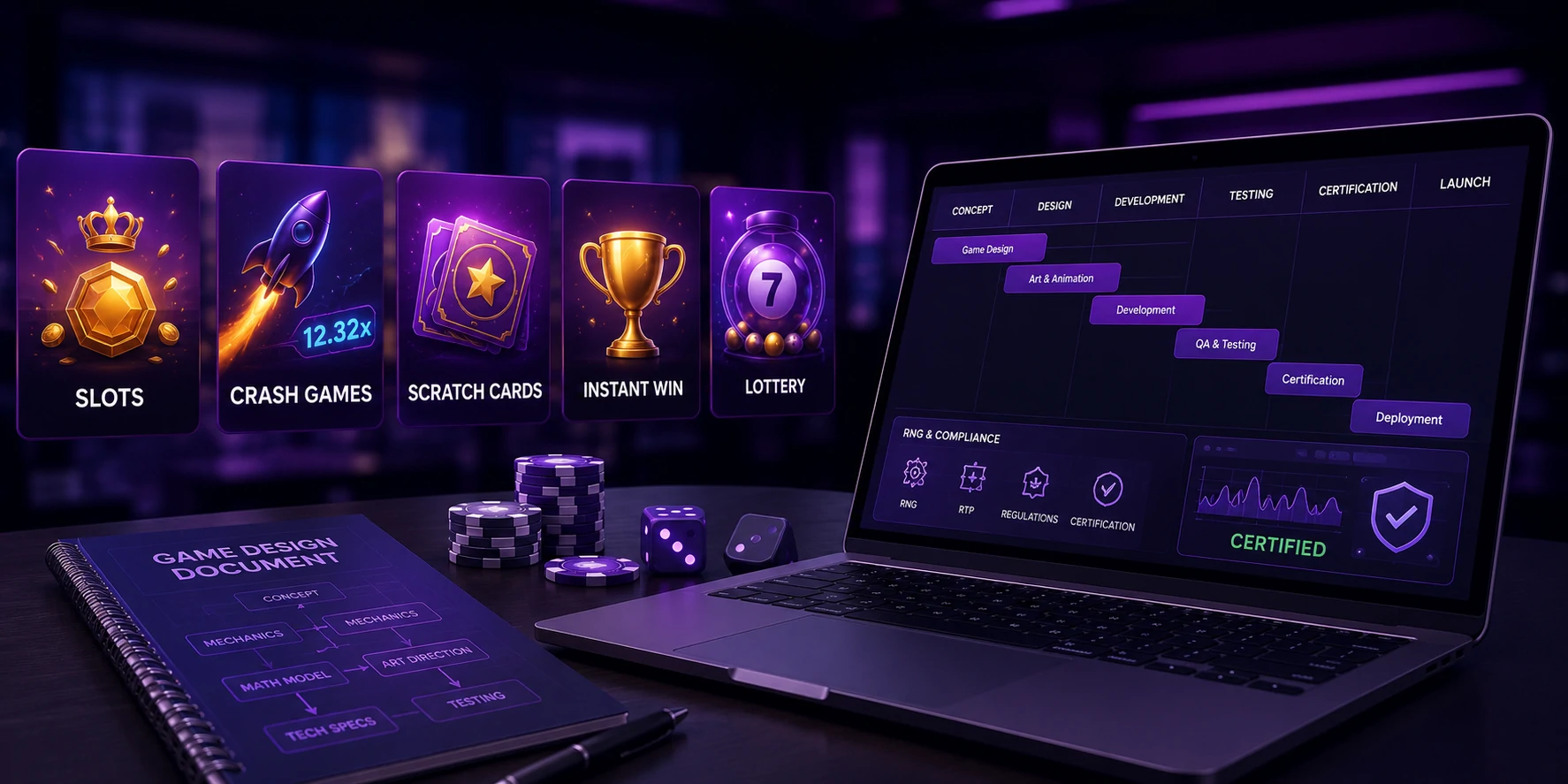
Crash games, Plinko, mini-slots, and instant-win formats have moved from experimental side content to core revenue drivers. What used to complement the portfolio is now often leading it.
According to the SOFTSWISS 2026 iGaming Trends Report, casual and social games are expected to grow by 39.3%, highlighting a clear shift toward faster, session-based gameplay.
This change is less about mechanics and more about behavior. Players are no longer approaching games as long sessions – they interact with them in short, repeated bursts.
The Rise of Crash Games and Instant-Win Formats: A Design and Development Breakdown
At the core of fast formats is a compressed experience loop. Instead of building anticipation over minutes, these games deliver outcomes almost instantly, often within seconds of interaction.
This shift aligns closely with how users consume modern digital content. The same patterns that drive engagement on short-form video platforms now influence gambling behavior – quick entry, immediate feedback, and rapid repetition.
The formats themselves vary, but they share a common philosophy:
- Crash games focus on timing and risk, where players decide when to exit
- Plinko mechanics translate randomness into visible physics
- Mini-slots strip reels down to their essence
- Instant-win games remove waiting entirely
What matters here isn’t complexity, but responsiveness. Every action must feel immediate and meaningful.

Where most studios get it wrong
The simplicity of these formats often creates a false sense of ease. In reality, removing layers of complexity exposes every weakness in execution.
“The biggest misconception is that fast games are easier to build. In reality, you’re removing layers that used to hide flaws – every millisecond of UX, every animation, every delay becomes visible and measurable”.
— Denys Kliuch, CEO of Whimsy Games
Why Fast Games Are the Hardest Slot Formats to Get Right
When there are fewer elements on screen, each one carries more weight. Fast games demand precision at a level that traditional slots can often mask.
User experience becomes unforgiving. Even the smallest delay or unclear interaction can break immersion, because players expect instant feedback. What might go unnoticed in a classic slot becomes a drop-off point in a fast game.
At the same time, mathematical design has to communicate fairness almost immediately. Players don’t spend time learning the system – they form opinions within a few rounds. This puts pressure on how randomness is presented visually, not just how it works under the hood.
There are several pressure points that consistently define success or failure:
- UX must feel instantaneous, without friction or hesitation
- visual feedback must explain outcomes without relying on text
- performance must remain stable under rapid, repeated interactions
Behind the scenes, this also creates a different kind of technical challenge. Fast games generate a higher frequency of actions per session, which means infrastructure must handle constant real-time activity rather than longer, spaced-out gameplay cycles.
How Product Thinking Changes in Fast iGaming Formats
Studios that succeed with these formats don’t treat them as simplified slots. They approach them as entirely different products.
The focus shifts from building features to designing interaction loops. Instead of asking “what happens next,” teams ask “how quickly can the player act again.”
Within production environments like Whimsy Games, this translates into a development approach centered on micro-level decisions – small details that shape the overall experience:
- how fast a session starts
- how quickly feedback is delivered
- how risk is perceived in real time
- how smoothly the game performs on mobile devices
A deeper look at this approach can be explored here.
The shift from content to behavior
Traditional slot development is largely content-driven. Themes, symbols, and bonus features define the experience.
Fast formats operate differently. They are driven by player behavior – how quickly someone engages, reacts, and repeats the action.
“Fast formats are not about what the player sees – they’re about how fast the player feels. If the emotional loop is even slightly off, the game simply doesn’t scale.”
— Denys Kliuch, CEO of Whimsy Games

Art & Development Differences vs Traditional Slots
The contrast between traditional slots and fast formats becomes clear at the production level.
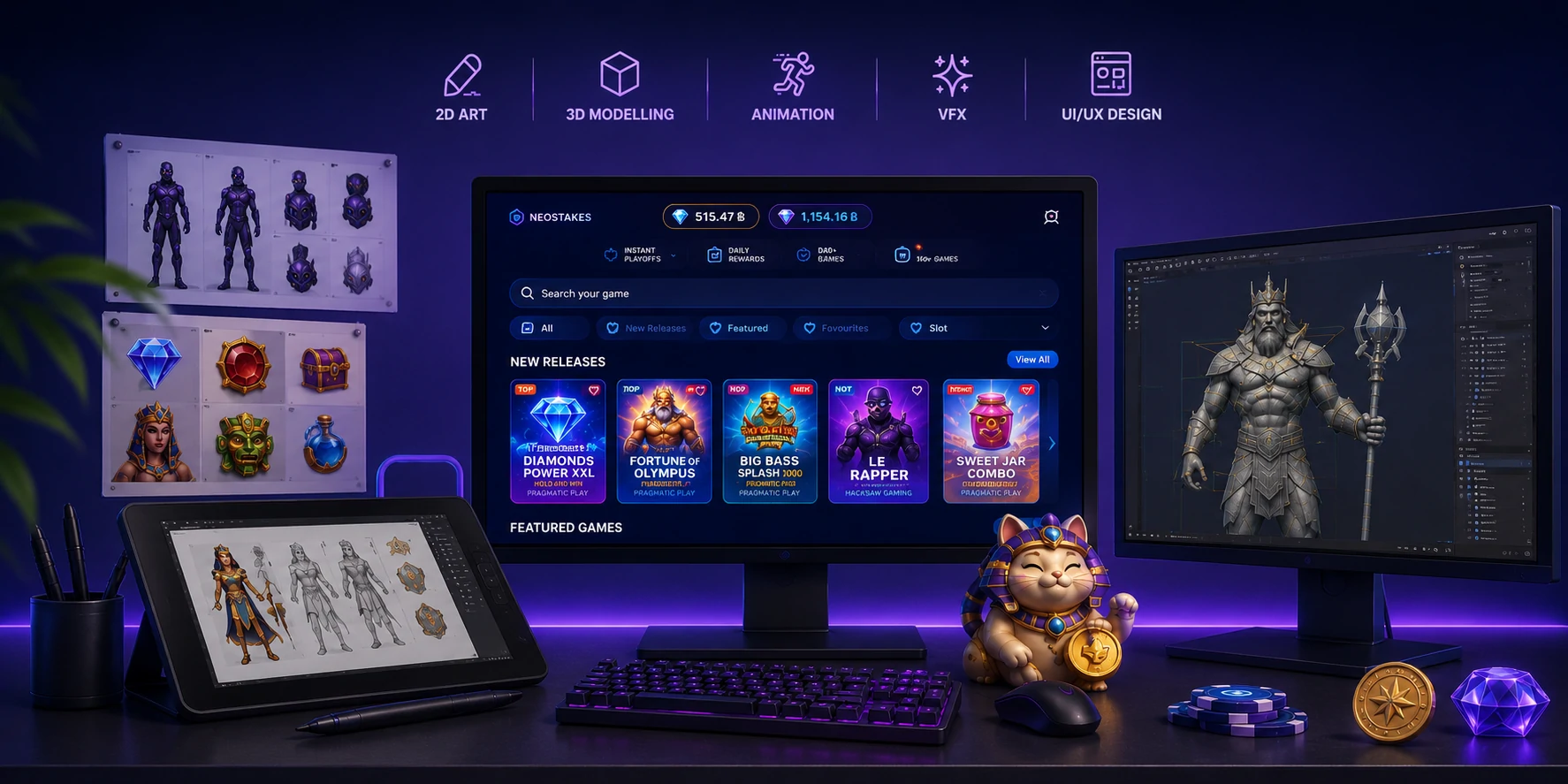
Classic slots rely on layered content: detailed art, multiple mechanics, and extended sessions. Fast games remove most of that structure, shifting the burden to responsiveness and clarity.
Instead of building large visual systems, teams focus on precision. Animations are shorter, interfaces are cleaner, and every visual element must justify its presence.
In practical terms, the differences can be summarized like this:
- traditional slots prioritize depth and feature variety
- fast games prioritize speed and interaction clarity
- slot pipelines are asset-heavy, while casual formats are performance-driven
This is why many studios struggle when trying to adapt existing pipelines. The production mindset itself has to change.
For example, studios that specialize in flexible development pipelines tend to adapt faster to these requirements.
What This Means for Operators and Studios
Fast games are not replacing traditional slots, but they are redefining how portfolios are structured.
Operators increasingly use them as entry points – lightweight experiences that attract players and keep them engaged between longer sessions. They also perform particularly well in mobile-first environments, where speed and simplicity are critical.
For studios, the shift introduces a new set of expectations. Fewer elements mean less room for error, and shorter sessions mean that engagement must happen immediately.
Final Thought: Simplicity Is the New Complexity
Fast and casual formats don’t reduce complexity – they concentrate it.
Every delay becomes visible.
Every interaction becomes critical.
Every second becomes part of the product.
And that’s exactly why crash games, Plinko, and instant-win formats are not just trending – they are setting a new standard for how iGaming products are designed and experienced.