


AR/VR Casino Experiences: How Immersive iGaming Is Evolving in 2026
Immersive technology is changing how players interact with online casino games. While traditional browser-based slots and table games remain dominant, developers are increasingly exploring virtual reality (VR) and augmented reality (AR) to create more engaging experiences.
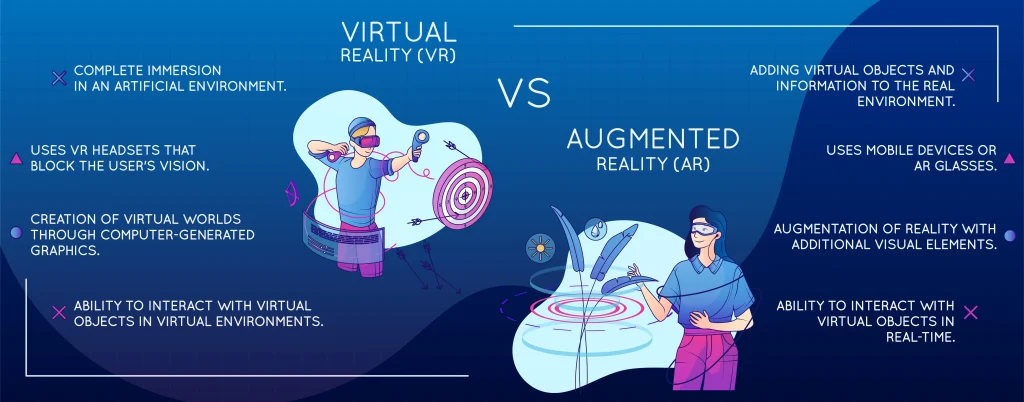
Rather than using simple 2D interfaces, players can enter virtual casino floors, explore slot machines, interact with dealers, and experience games from a first-person perspective. AR overlays casino elements onto the real world via mobile devices or AR glasses.
For studios exploring the future of iGaming, VR casino game development is becoming an increasingly important area of innovation. As game engines and hardware continue to evolve, immersive casino environments are gradually becoming technically and commercially viable. According to industry research, the global AR and VR gaming market is expected to reach $11.6 billion by 2028, reflecting strong growth driven by improvements in VR headsets, mobile processing power, and cloud streaming technologies.
Key Takeaways
- AR and VR technologies are introducing immersive casino environments
- VR casino game development requires real-time 3D environments and interaction systems
- Immersive iGaming design must balance visual realism with performance optimization
- Multiplayer architecture and regulatory compliance remain essential for casino platforms
Definition: AR/VR Casino Experiences
AR/VR casino experiences are online environments that use augmented reality (AR) or virtual reality (VR) technology, enabling players to interact with casino games in three-dimensional digital spaces rather than traditional two-dimensional interfaces.
These immersive environments replicate elements of real casinos such as gaming floors, slot machines, dealers, and player avatars while maintaining the underlying mechanics of online gambling platforms, including random number generators, betting systems, and multiplayer interactions.
What Are AR/VR Casino Experiences?
AR and VR casino experiences are interactive casino platforms that allow players to explore and engage with games in three-dimensional environments.
Unlike traditional online casinos with menus and flat interfaces, immersive casinos simulate real casino spaces where players move between slot machines, join table games, and interact with others via avatars.
VR casinos create a fully digital environment accessed through VR headsets and motion controllers. AR casinos instead overlay casino elements onto the user’s physical surroundings using smartphones or AR glasses.
This shift from screen-based to spatial interaction changes how casino games are designed, developed, and optimized.
How to Build a VR Casino Game: What Developers Need to Know in 2026
Developing a VR casino game combines traditional casino mechanics with immersive environments and real-time interaction systems. This process is more complex than creating standard browser-based slots or table games.
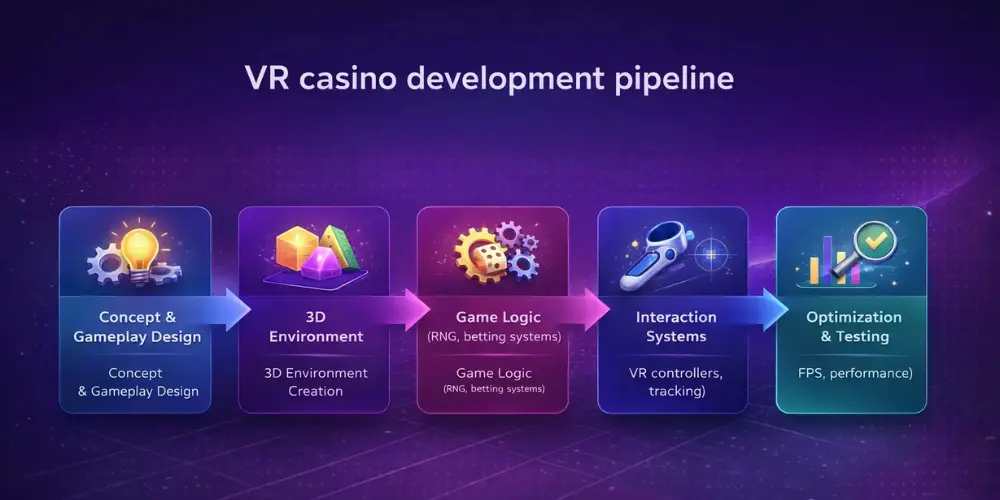
VR casino development typically includes several key stages.
- Concept and gameplay design
Developers define player interactions within the virtual casino, including navigation, avatar engagement, and game mechanics like placing bets, spinning reels, and interacting with dealers.
- 3D environment creation
Artists create casino floors, slot machines, tables, lighting, and environmental assets. The environment must replicate real casino atmospheres while staying optimized for VR hardware.
- Game logic integration
Core casino systems such as RNG engines, payout logic, and betting mechanics must integrate seamlessly with the immersive interface.
- Interaction design
VR games require intuitive controls. Motion controllers, hand tracking, and gaze-based systems must feel natural and responsive.
- Optimization and testing
VR environments must maintain a stable frame rate, typically 72 to 90 frames per second, to prevent motion sickness and preserve immersion.
Immersive casino platforms still rely on the same backend architecture used in traditional iGaming titles, including structured casino game development pipelines and production lifecycles.
Developer Insight
VR casino game development demands closer collaboration than traditional projects. Game designers, 3D artists, technical artists, and engine programmers must coordinate to ensure visual immersion and stable performance.
Minor optimization issues in lighting, geometry, or shaders can reduce frame rates and disrupt the VR sense of presence. This need for precision makes immersive casino projects more complex than standard slot or table game development.
Designing for Immersive iGaming: AR and VR Art Direction Challenges
Art direction is more complex for immersive environments. Traditional casino art targets screen-based interfaces, while VR and AR games operate within fully three-dimensional spaces.
Developers face several unique visual design challenges.
Spatial design and scale
Objects must have a realistic size and placement. Slot machines, tables, and environments should match natural proportions to preserve immersion.
Performance constraints
High-quality visuals must balance performance demands. VR headsets require optimized models, efficient shaders, and controlled lighting.
User interface design in 3D space
Traditional UI panels cannot appear on flat screens. Instead, UI elements must be floating interfaces, holographic panels, or integrated into the environment.
Player comfort
Motion design should avoid abrupt camera moves and excessive environmental motion. Smooth transitions and predictable animations are essential for comfortable VR gameplay.
The visual production process resembles traditional slot game art pipelines, but immersive environments require additional world-building and spatial interaction design.
AR vs VR in Casino Game Development
Although AR and VR are often mentioned together, they serve different purposes within casino gaming.
| Technology | Primary Use Case | Development Focus | Hardware |
| VR | Fully immersive casino environments | 3D environments and interaction systems | VR headsets |
| AR | Mobile-enhanced casino experiences | Mobile rendering and real-world overlays | Smartphones, AR glasses |
| Mixed Reality | Hybrid interactive environments | Spatial mapping and environment tracking | MR headsets |
VR is currently more common in social casino environments, where players interact with one another within shared digital spaces. AR, on the other hand, is often used for mobile casino marketing campaigns and promotional experiences.
Technical Considerations for AR/VR Casino Development
Building immersive casino games introduces several technical requirements beyond those of traditional casino software.
- Game engine selection
Most immersive casino platforms are built using engines such as Unity or Unreal Engine, which support real-time rendering, physics systems, and VR frameworks.
- Network architecture
Multiplayer environments require a stable network infrastructure that supports real-time player interaction and synchronized game states.
- Regulatory compliance
VR casino games must comply with the same regulatory standards as traditional online casino titles, including certified RNG systems and fairness testing.
- Device compatibility
Developers must ensure consistent performance across different VR headsets and mobile AR devices. Choosing the right engine and network architecture is a critical decision in VR casino game development, especially when building multiplayer environments.
Development timelines for immersive casinos are often longer than those for typical slot production cycles, as detailed in guides on casino game development costs and timelines.
Why Immersive Casinos Are Still Emerging
Despite technological progress, immersive casino platforms remain a relatively small segment of the broader iGaming industry.
One reason is hardware adoption. VR headsets are still less common than smartphones and desktop computers. Another factor is production cost, as immersive environments require more complex development pipelines.
Casino operators also tend to prioritize games that generate immediate revenue, such as mobile slots.
However, as hardware prices decrease and real-time rendering technology improves, immersive gaming experiences are expected to become more common.
Many analysts believe AR and VR casinos may become more important as multiplayer gaming platforms and metaverse-style environments continue to evolve.
Are VR Casinos Legal and Regulated?
Yes. VR casino games must follow the same regulatory requirements as traditional online casino games. Even though the player interface is immersive, the underlying systems still rely on certified random number generators, secure payment systems, and licensed operators.
Regulatory bodies such as the Malta Gaming Authority, the UK Gambling Commission, and Curacao eGaming require casino software providers to certify their games through independent testing laboratories.
For developers, this means immersive casino platforms must still integrate the same backend systems used in traditional iGaming platforms, including RNG certification, fairness audits, and responsible gaming features.
The Future of Immersive iGaming
AR and VR technologies are opening new possibilities for casino experiences that go beyond traditional interfaces. Instead of simply pressing buttons on a screen, players can interact with games in fully immersive environments.
For developers and studios exploring the future of iGaming, immersive technology represents both a challenge and an opportunity. Building these experiences requires new design approaches, advanced art pipelines, and powerful real-time technologies.
As hardware adoption grows and development tools mature, immersive casino environments may gradually become a new category within online gambling entertainment.