
Slot Game Art Services: A Complete Guide to Visual Production in Modern iGaming
Slot games are among the most visually competitive products in the iGaming industry. In a typical online casino lobby, hundreds of slots compete for player attention, and the visual design of a game often determines whether players decide to try it.
For studios working at scale, slot game art is no longer just about visual appeal – it is a performance driver tied to retention and monetisation. At Whimsy Games, slot art production is approached as a system in which symbol clarity, animation feedback, and thematic consistency are designed to influence player behaviour from the very first spin.
Symbols, characters, environments, animations, and visual effects all play a critical role in shaping the player’s experience. Strong visual identity not only attracts players but also reinforces the theme and enhances engagement during gameplay.
Growth of the Slot Game Market
The global slot machine market is projected to grow from $16.8 billion in 2024 to $28.3 billion by 2034, highlighting the continued demand for new slot titles and visual innovation.
Slot game art services refer to the design and production of all visual assets used in a slot game, including reel symbols, characters, backgrounds, UI elements, animations, and visual effects.
This guide explains how slot game art is created, what styles dominate the market, how production pipelines work, and what technical standards artists follow when developing assets for modern slot games.
What Art Styles Are Most Popular in Slot Games Right Now?
Slot games use a wide range of visual styles depending on theme, audience, and platform requirements. However, several art directions dominate the market today.
One of the most common approaches is high-detail 3D realism. This style focuses on cinematic lighting, realistic textures, and detailed characters. It is frequently used in mythology-based slots, adventure themes, and branded casino titles.
Another popular direction is stylized 2.5D illustration. Instead of full realism, artists create highly polished illustrated symbols with strong outlines and vibrant colors. This style works particularly well for mobile-first slot games because it ensures symbols remain readable on small screens.
Many studios also use cartoon-inspired art styles, which feature exaggerated shapes, playful characters, and bright color palettes. These visuals appeal to a broader audience and support more expressive animations during bonus rounds.
Finally, some slot games rely on minimalist symbol-driven design, where clarity and icon recognition take priority over complex visual details. This style is common in classic slot formats or retro-inspired casino games.
Choosing the right art style depends on factors such as the game theme, target platform, performance requirements, and branding strategy.
“The biggest mistake teams make is choosing a style based on trends rather than readability and player context. In slots, visual clarity always outperforms visual complexity — especially on mobile,” says Denys Kliuch, CEO of Whimsy Games.
How Is Slot Game Art Different From Other Casino Game Art?
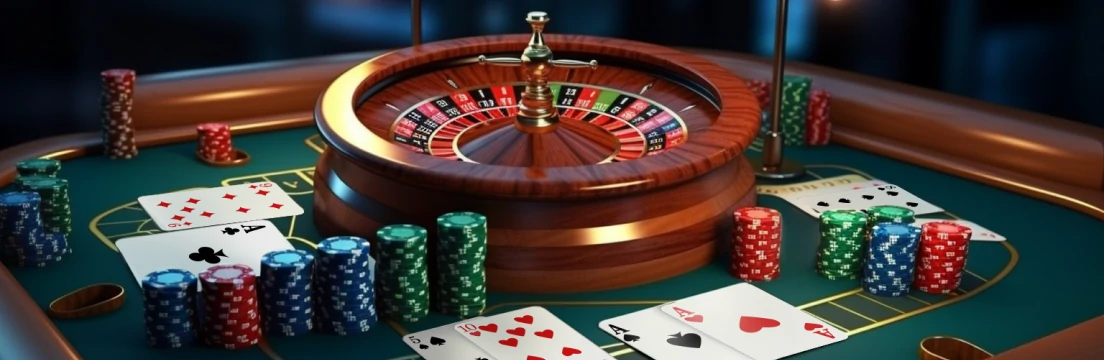
Slot games require significantly more visual assets than traditional casino games such as blackjack, roulette, or poker.
Table games typically prioritize realism and clarity. Their goal is to replicate the experience of a physical casino table, which means the visual design is usually minimal and functional.
Slot games, by contrast, are designed as entertainment-first experiences. The visuals must create excitement, reinforce player rewards, and build a recognizable theme.
There are several important differences.
First, slot art must support frequent animation and visual feedback. Winning combinations, bonus triggers, and multipliers often trigger animations, particle effects, and symbol transformations.
Second, slot visuals must be instantly readable. Players need to quickly recognize which symbols represent high-value icons, low-value icons, or special features like wild and scatter symbols.
Third, slot games often feature narrative-driven themes, in which characters, environments, and visual effects contribute to the game’s overall atmosphere.
Because of these factors, slot games require far more artwork and animation assets than other casino games.
What Does a Slot Game Art Production Pipeline Look Like?
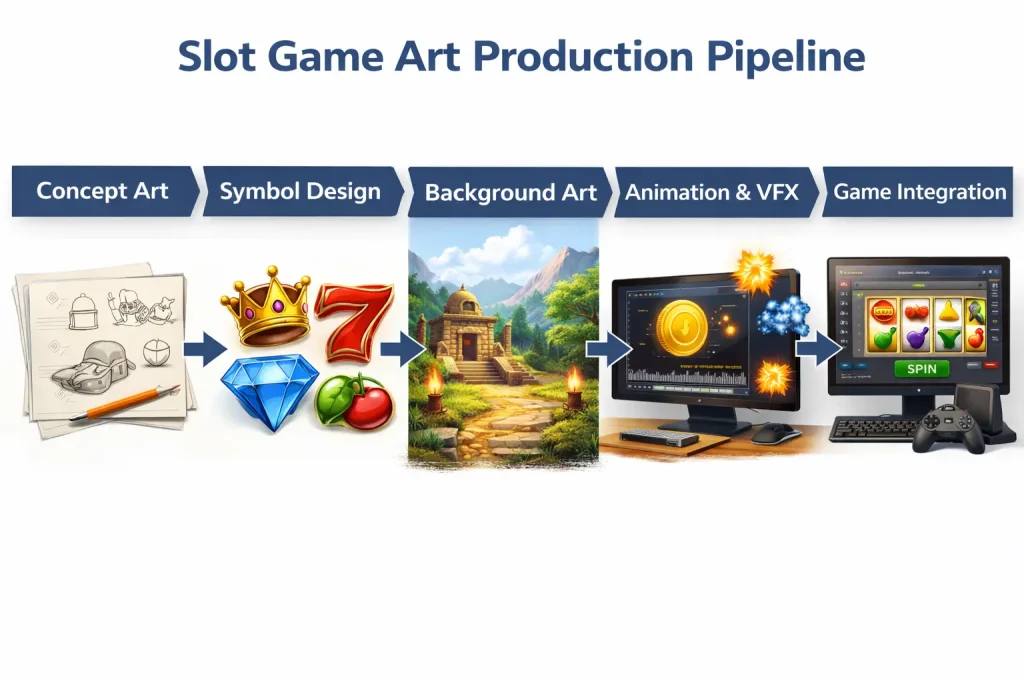
The production of slot game art typically follows a structured pipeline to ensure consistency across all assets.
In production environments, this pipeline is rarely linear. At Whimsy Games, art teams work in parallel with developers and game designers, allowing early validation of symbol readability, animation timing, and technical constraints before full asset production begins. This reduces rework and ensures that art decisions align with gameplay logic from the start.
The process begins with concept development. Artists create mood boards, explore thematic references, and sketch early ideas for symbols, characters, and environments. At this stage, the art director defines the game’s visual direction.
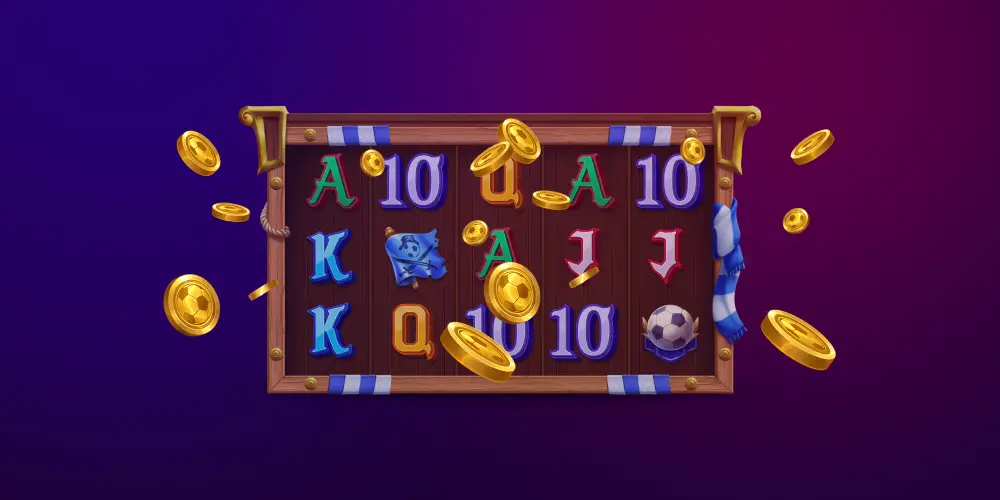
Next comes symbol design, one of the most important stages in slot development. Most slot games include 10–14 reel symbols, including low-value icons, premium symbols, wilds, and scatter symbols. Each symbol must be visually distinct and clearly readable.
After the symbol set is approved, artists move on to creating the environment and background. This stage establishes the visual world in which the slot machine exists.
The next step is to produce animation and visual effects. Winning combinations often trigger glow effects, symbol explosions, particle effects, or animated transitions that enhance player feedback.
Finally, the assets are prepared for game engine integration. Developers import the artwork into the slot framework, optimize performance, and ensure the game runs smoothly across desktop and mobile platforms.
How Many Artists Does It Take to Build a Slot Game?
The size of a slot art team depends on the scale and complexity of the project.
A small slot game may be created by a team of 3-4 artists, while larger productions with complex characters and animated bonus rounds may involve 6-10 artists or more.
A typical slot art team may include:
- an art director responsible for visual direction
- concept artists who design characters and symbols
- 2D illustrators or 3D artists who produce final assets
- UI artists who design the interface and reel frames
- VFX or animation specialists who create winning animations and effects
The number of artists also depends on the production timeline and the number of animations required.
What File Formats and Technical Specs Do Slot Game Artists Work With?
Slot game art production must adhere to strict technical requirements to ensure assets can be integrated efficiently into casino game engines.
Most 2D artwork is delivered as PNG files for final assets and as PSD files for layered source files. These formats allow developers to separate elements, animate individual layers, and optimize file sizes.
For 3D-based slot games, artists typically export models using FBX or OBJ formats, which are compatible with most game engines and animation pipelines.
Animations can be implemented in several ways depending on the engine architecture. Common approaches include sprite sheets, skeletal animations, or Spine animation systems.
Resolution requirements vary between platforms, but many studios create assets at high resolution and then optimize them for mobile performance.
Balancing visual quality with performance efficiency is a critical part of slot game art production.
How Do Studios Create Cohesive Visual Themes Across Slot Game Symbols?
Consistency is essential for successful slot game art. If symbols feel disconnected or inconsistent, the game quickly loses visual clarity and thematic immersion.
Studios maintain cohesion through a structured art direction process.
First, teams develop a visual style guide that defines color palettes, lighting rules, textures, and rendering techniques. This guide ensures all artists follow the same visual principles.
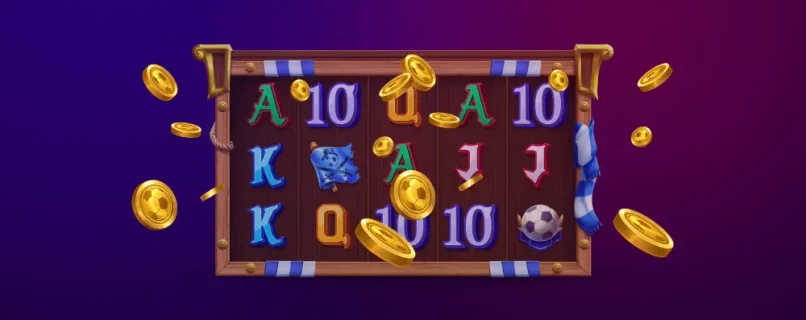
Second, artists establish a symbol hierarchy. High-value symbols typically feature characters or detailed objects, while low-value symbols often resemble playing card icons such as A, K, Q, and J.
Third, all symbols must follow the same rendering techniques, including lighting direction, shading style, outlines, and material details.
Throughout production, art directors review assets to ensure they align with the game’s visual identity.
When executed correctly, cohesive slot art strengthens the game’s theme and improves player comprehension.
Typical Slot Game Art Asset Breakdown
A single slot game often requires dozens of visual assets to support gameplay and animations.
| Asset Type | Typical Quantity | Purpose |
| Reel symbols | 10–14 | Core gameplay icons |
| Character illustrations | 1–5 | Represent the game theme |
| Background environments | 1–3 | Establish a visual setting |
| UI elements | 15–30 | Interface and controls |
| Animations and VFX | 20–60 | Feedback for wins and bonuses |
Depending on the game’s complexity, the total number of assets can exceed 80–120 individual visual elements.
Why Slot Game Art Services Matter for Player Engagement
In modern iGaming platforms, visual presentation strongly influences whether players try a slot game.
“Players don’t consciously analyse slot visuals, but they instantly react to them. The speed at which a player understands symbols, feels reward feedback, and connects with the theme directly impacts retention,” explains Denys Kliuch, CEO of Whimsy Games.
Strong slot art creates immediate visual appeal, reinforces the theme, and helps players quickly understand gameplay elements.
High-quality symbols, animated effects, and cohesive environments contribute to a more immersive experience, increasing player retention and session duration.
Studios specializing in slot game art services support casino developers by creating complete visual packages – from reel symbols and characters to UI assets and animated effects – ensuring that slot games stand out on crowded casino platforms.