Game Art Outsourcing for iGaming: 2D, 3D, and Animation Services Explained
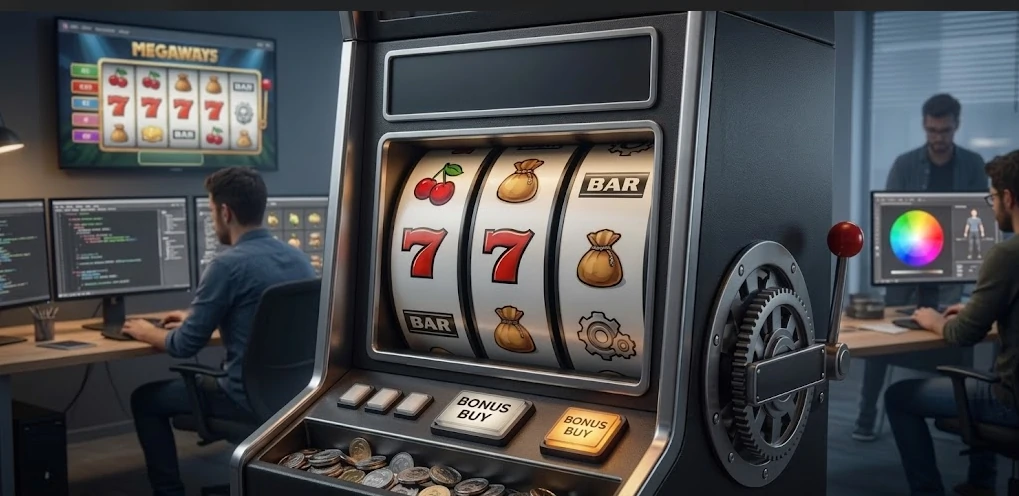
Game art outsourcing for iGaming means bringing in an external studio to create all the visual assets your title needs—from the very first concept sketch to engine-ready animated sprites, 3D models, symbol sheets, and background environments. The studio delivers files in agreed formats; your team integrates them into the game and ships. You can do this without ever building a permanent in-house art department.
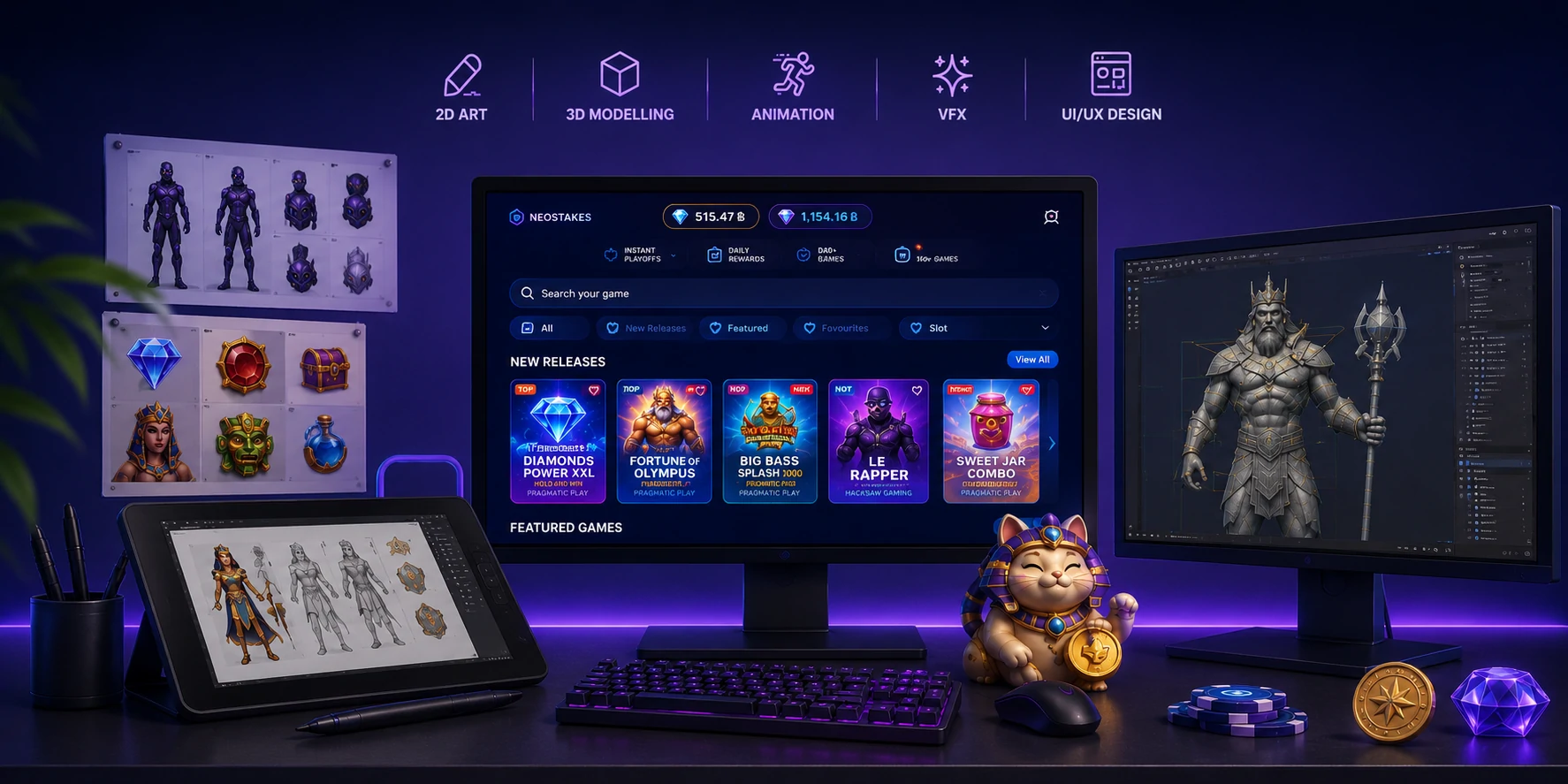
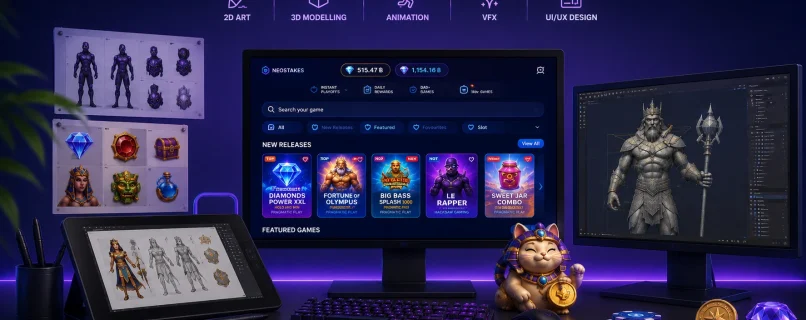
In practice, that scope is much broader than most operators expect when they first start looking for help. It is not just “getting some icons drawn.” A complete game art outsourcing engagement typically covers concept art, 2D illustration and UI, 3D modelling and rigging, character and symbol animation, background environments, and VFX. Depending on the studio, it can also include reskins of existing titles, promotional key art, and live-ops asset packs.
The market is growing fast for a reason. According to Business Research Insights, the global game art outsourcing market is valued at USD 0.65 billion in 2026 and is projected to reach USD 1.27 billion by 2035 at a 9% CAGR. Around 72% of game studios now outsource at least one art function, and asset production cycles have shortened by 35% compared to fully in-house workflows.
For iGaming operators and publishers specifically, the argument is even stronger. Slot and casino game art is highly specialised: symbol sheets must match exact reel dimensions, animations must loop cleanly at regulated frame rates, and UI components must scale across dozens of device resolutions without visual degradation. That mix of technical precision and creative skill is expensive to maintain in-house but relatively simple to commission on a per-project basis.
This guide walks through every service category in detail, shows how a professional production workflow runs from brief to delivery, and ends with a practical comparison of your three main engagement options: freelancer, art studio, and full-cycle development partner.
What Game Art Outsourcing Actually Includes
The deliverable list for a single slot title is longer than most people outside game production expect. A standard commission from an iGaming operator will touch multiple art disciplines, each with its own pipeline, tools, and file format requirements.
2D Concept Art and Style Development
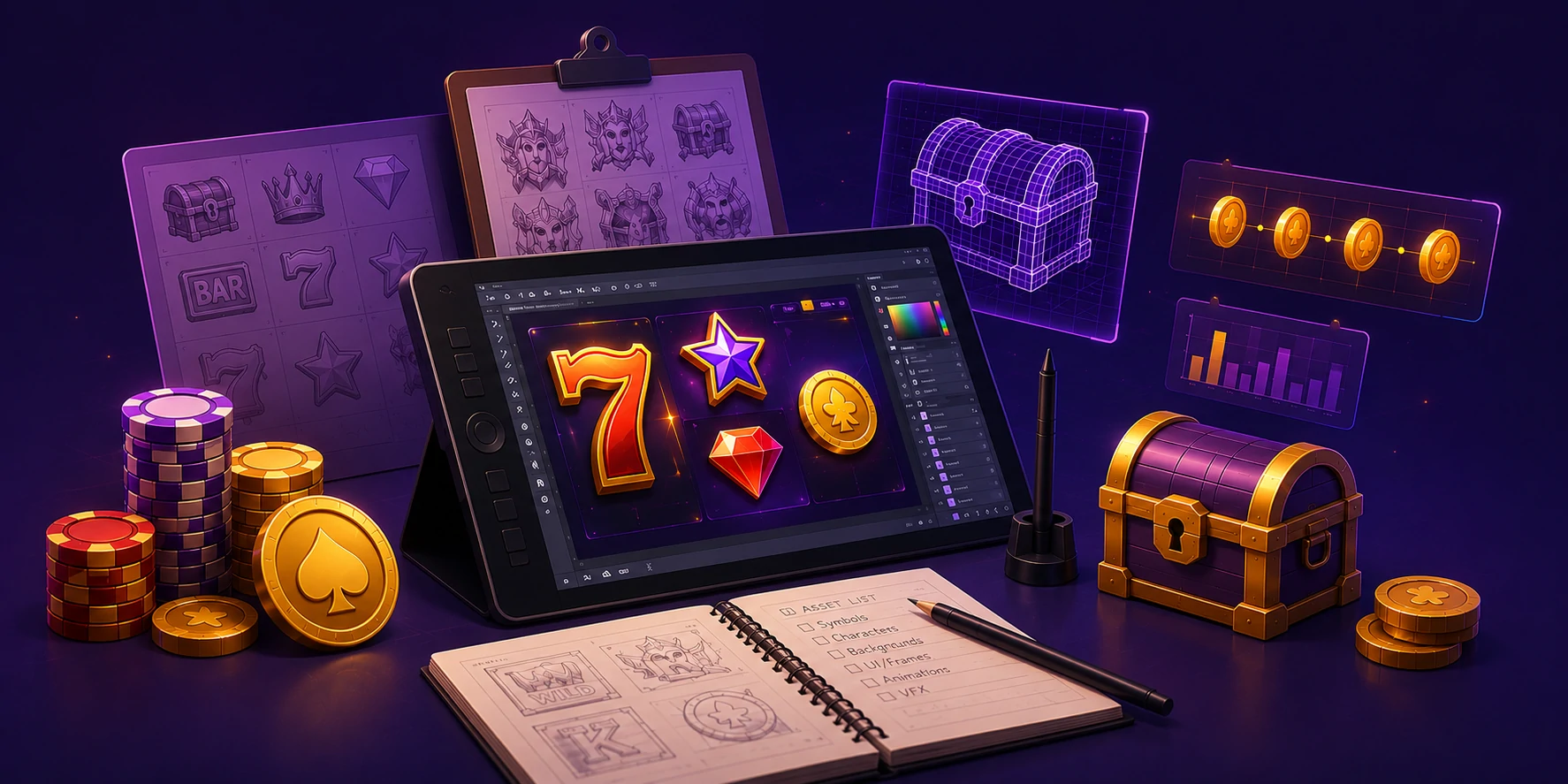
Every project starts with concept art, whether the final output is 2D or 3D. Concept artists define the visual language of the game: colour palette, character proportions, thematic references, and the overall mood. For iGaming, this stage also establishes how symbols will read at small sizes on mobile screens—a constraint that influences composition decisions from the very first sketch.
Deliverables at this stage typically include:
- Mood boards and visual reference sheets
- Character and symbol concept sketches (usually 2-3 variants per asset)
- Approved style guide for use throughout production
- Colour palette documentation
A solid concept stage saves time and money later. Studios that skip or rush this phase tend to end up with symbol sets that feel visually inconsistent, because individual artists are making style decisions in isolation without a shared reference.
2D Illustration and UI Design
Once the style is approved, 2D illustrators produce the final flat artwork. In iGaming, this covers:
- Symbol sheets: The full set of paying symbols (typically 8-12), including low-value card suits and high-value thematic characters or objects. Each symbol is delivered as a layered PSD and a flattened PNG at the required resolution (commonly 512×512 px or 256×256 px per symbol).
- Background environments: The static or animated backdrop behind the reels. Backgrounds must work at 16:9 and 9:16 aspect ratios for desktop and mobile respectively.
- UI components: Spin button, win lines, balance display, bet selector, paytable panels, and bonus trigger overlays. These must meet accessibility contrast standards and remain legible on small screens.
- Promotional art: Key art for game thumbnails, lobby banners, and marketing materials.
3D Modelling and Rigging
3D game art outsourcing adds a layer of production complexity but delivers significantly higher visual fidelity. The 3D pipeline runs as follows:
- High-poly sculpting (ZBrush or equivalent) to establish form and surface detail
- Retopology to create a clean, game-ready low-poly mesh
- UV unwrapping to prepare the model for texturing
- PBR texturing (Substance Painter or equivalent) for physically accurate materials
- Rigging to create a skeleton and control structure for animation
- Engine export in FBX or GLB format, optimised for Unity or Unreal
For slot games, 3D assets are often reserved for character mascots, bonus round environments, and intro cinematic sequences. Symbols themselves usually remain 2D for performance reasons. That said, more premium titles are starting to use rendered 3D symbols to stand out in crowded lobbies.
Background Environments
Background art in iGaming is more technically demanding than it appears. A single game background typically requires:
- A layered parallax structure (foreground, midground, background layers) to enable depth animation
- Separate idle animation loops (torch flames, water ripples, foliage movement) exported as sprite sheets or Spine animations
- Colour-graded variants for day/night cycles or bonus round state changes
- Resolution-independent delivery for 1080p desktop and 720p mobile targets
The Role of Animation in iGaming Art
Animation is where iGaming art really earns its keep. A static symbol sheet may look good in a still image, but it is the animation layer that drives player engagement during real gameplay. Research consistently shows that visual feedback—the flash of a winning combination, the cascade of coins, the awakening of a character mascot—is a key driver of session length and repeat play.
In slot games, animation isn’t just decoration. It is a core engagement mechanic.
Symbol Animation
Every symbol in a modern slot title has at least two animation states:
- Idle animation: A subtle looping motion (a gentle pulse, a slow rotation, a breathing effect) that keeps the reels visually alive between spins.
- Win animation: A more dramatic sequence triggered when the symbol forms part of a paying combination. This typically runs for 1.5 to 3 seconds and is designed to be visually rewarding without obscuring the win display.
Premium titles often add a third state: the anticipation animation, triggered when two matching high-value symbols land and the third reel is still spinning. This micro-animation heightens tension and is one of the most technically precise deliverables in the art package, because it must sync perfectly with reel spin timing in the game engine.
Character Animation
Character mascots, bonus round protagonists, and intro cinematic figures require a full animation rig with multiple states:
| Animation State | Trigger | Typical Duration |
| Idle loop | Continuous background | 3-6 seconds, seamless loop |
| React (small win) | Win under 10x bet | 2-3 seconds |
| Celebrate (big win) | Win over 50x bet | 4-6 seconds |
| Bonus trigger | Scatter combination | 3-5 seconds |
| Loss reaction | Optional, by design | 1-2 seconds |
These are delivered as Spine animation files (the industry standard for 2D skeletal animation in web-based iGaming) or as sprite sheet sequences for simpler implementations.
VFX and Particle Systems
Win celebrations, free spin activations, and jackpot triggers lean heavily on particle-based VFX: coin showers, light bursts, energy pulses, and screen-edge glow effects. These can be delivered either as sprite sheet animations or as Unity/Unreal particle system presets, depending on the client’s engine.
The game animation services required for a complete slot title typically represent 30-40% of total art production hours. Operators who underestimate this at the briefing stage consistently find themselves requesting scope extensions mid-project.
The Production Workflow: From Brief to Delivery
A professional game art outsourcing engagement follows a structured pipeline. Understanding each stage helps operators set realistic expectations, plan internal review time, and avoid the most common causes of delay.
Stage 1: Creative Brief and Scope Definition
The process starts with a detailed creative brief. A solid brief covers the game theme, target audience, visual references, platform targets (desktop, mobile, or both), reel configuration, symbol count, and any regulatory constraints on imagery. The more specific the brief, the fewer revision cycles you will need later.
At this point, the studio also prepares a scope document listing every deliverable, along with its format and resolution. This document becomes the contractual reference for the entire engagement.
Key takeaway: Operators who invest 2-3 hours in a detailed brief typically save 1-2 weeks of revision time later in production.
Stage 2: Concept Development and Style Approval
The studio then produces initial concept sketches and mood boards. For a standard slot title, this usually means 2–3 character concept variants and a background composition sketch. The client chooses a direction and provides consolidated feedback.
This is the most important review gate in the project. Changes to the visual style after this point are costly, because they require reworking assets that have already been produced.
Stage 3: Asset Production
Once the style is locked, the studio moves into full production. Assets are produced in logical batches: symbols first (as they inform UI colour decisions), then backgrounds, then UI components, and finally animation.
Most professional studios use a shared project management platform so clients can track progress asset by asset. For projects lasting longer than four weeks, weekly check-in calls are standard.
Stage 4: Revision Rounds
Professional engagements typically include a defined number of revision rounds per asset category—usually two. Any revisions beyond the agreed scope are priced separately.
The best results come when there is one consolidated voice per review round. Studios cannot act on conflicting feedback from multiple internal stakeholders at the same time. It pays to designate a single decision-maker on the client side before production starts.
Stage 5: Final Delivery
Final assets are delivered in a structured folder system with:
- Source files (PSD, AI, or native 3D project files) for future modification
- Export-ready production files (PNG sprite sheets, FBX models, Spine JSON animation files)
- A delivery manifest listing every file, its dimensions, and its intended use
- Integration notes for the development teamelopment team
Typical Timelines
| Project Scope | Estimated Duration |
| Symbol set only (10 symbols, static) | 2-3 weeks |
| Symbol set with idle and win animations | 4-6 weeks |
| Full slot art package (symbols, background, UI, animations) | 8-12 weeks |
| Full slot art package with 3D character and VFX | 12-16 weeks |
| Reskin of existing title | 3-5 weeks |
These timelines assume one client-side reviewer, prompt feedback (within 48 hours of each review submission), and no scope changes after the concept approval stage.
Current Trends in iGaming Game Art Services
The iGaming art market is not static. Several shifts are reshaping what operators should expect from a game art design services partner in 2026.
AI-Assisted Production
Over 66% of outsourcing studios have now adopted AI-assisted design tools, according to Business Research Insights, improving asset creation speed by roughly 30%. In practice, this means concept art iterations that previously took three days can now be produced in one, and texture variation sets for symbol reskins can be generated in hours rather than days.
The important nuance: AI tools speed up production but do not replace artistic direction. Studios that get the best results use AI for repetitive or exploratory tasks (texture generation, colour palette variations, background element population) while keeping human artists in charge of composition, character design, and final polish. For iGaming, where visual consistency across 10–12 symbols is non-negotiable, the quality gap between AI-assisted human work and purely AI-generated art is still significant.
Hyper-Realistic and Cinematic Styles
Player expectations have shifted. Many players now entering online slots grew up with console games and streaming platforms. Static, flat symbol art struggles to stand out in lobbies where premium titles set the benchmark.
Studios are responding with:
- Rendered 3D symbols with physically accurate lighting and material detail
- Cinematic intro sequences (15-30 seconds) that establish narrative context before gameplay begins
- Animated backgrounds with multiple parallax layers and environmental storytelling
This trend increases art budgets but also increases differentiation. A title with a genuinely cinematic art direction stands out in any aggregator lobby, which translates directly to click-through rates.
Cross-Platform Visual Consistency
With players moving fluidly between desktop browsers, mobile apps, and increasingly tablet-optimised interfaces, art must perform across a wider range of screen sizes and resolutions than ever before. Professional game art design services now deliver adaptive asset sets: separate resolution tiers for mobile (720p), desktop (1080p), and high-DPI displays, all maintaining visual consistency.
Reskinning as a Commercial Strategy
Reskinning—creating a new visual theme on top of an existing game framework—has moved from being a shortcut to a standard business model. Operators can launch multiple thematic versions of a proven mechanic without rebuilding the math or code from scratch. The art package for a reskin is typically 40–50% of the cost of a completely new title, making it one of the most cost-effective ways to expand a game library.
Whimsy Games’ slot game art reskin service is specifically designed for operators who want to refresh underperforming titles or launch seasonal variants without a full redevelopment cycle.
Whimsy Games Art Portfolio: What the Work Looks Like in Practice
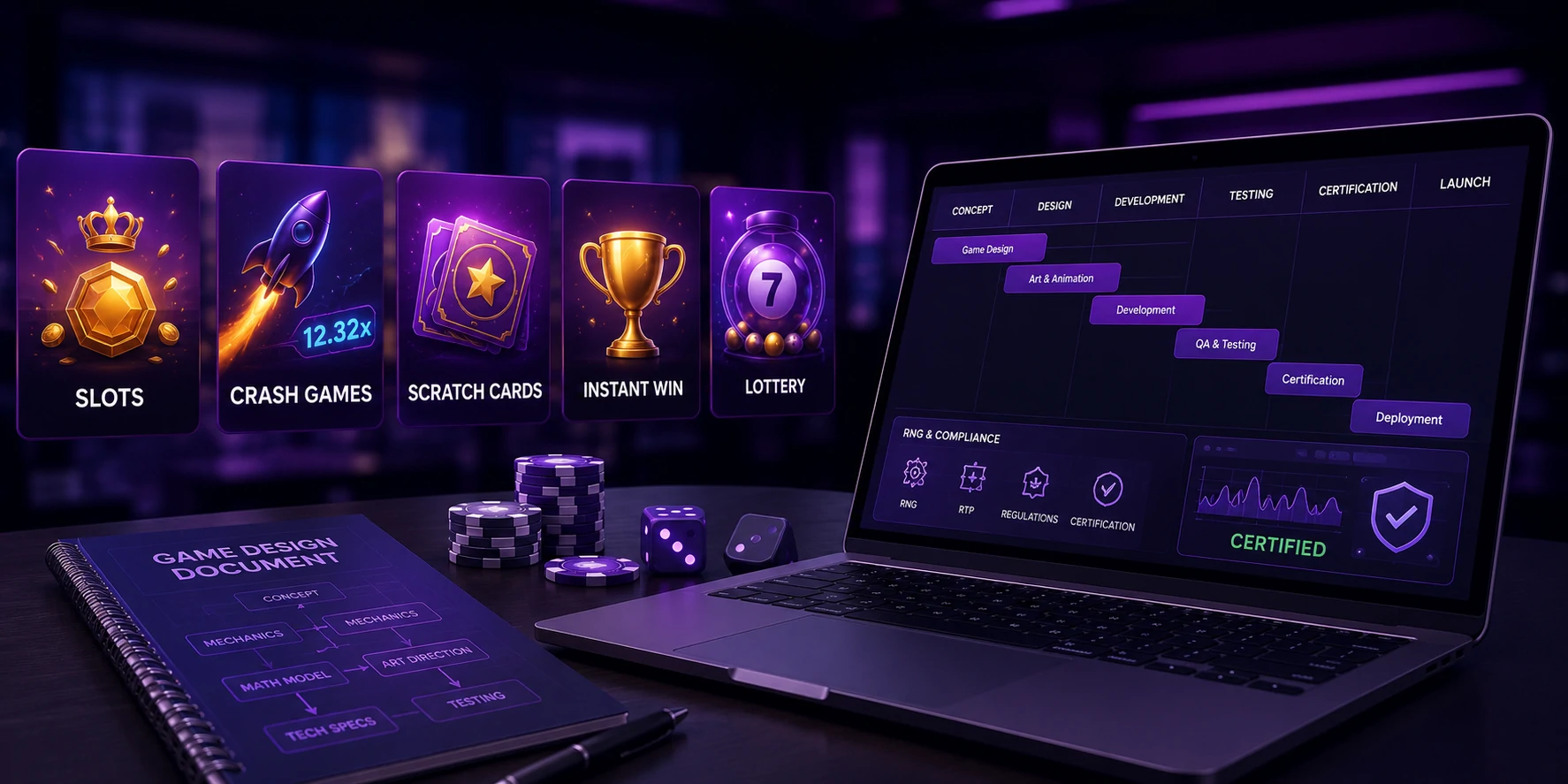
Understanding what game art outsourcing includes in theory is useful. Seeing it applied across real iGaming titles is more useful still. Whimsy Games has contributed art production and development services across more than 100 projects over eight years, spanning slot games, lottery titles, scratch cards, instant-win titles, and crash games.
Legends of Egypt
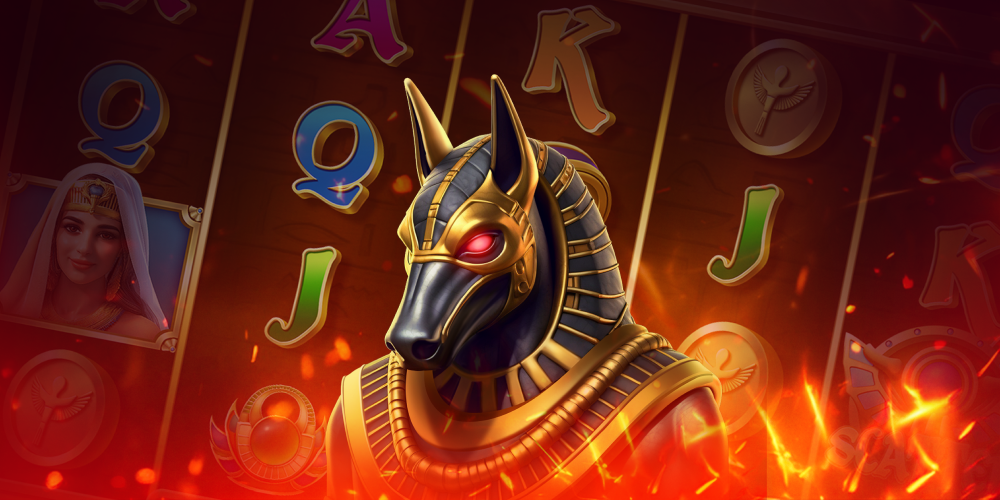
The Legends of Egypt slot is a full-cycle production that shows what a complete art package looks like in practice. The title features a 5-reel layout with 10 paying symbols, each designed to stay readable on mobile while still looking rich on desktop. The background environment uses a three-layer parallax structure with animated torch flames and a slow atmospheric haze. Character mascots were rigged in Spine with four animation states: idle, small win, large win, and bonus trigger.
The art direction balances familiar Egyptian slot visuals (gold, hieroglyphs, iconic deities) with a contemporary rendering style that avoids the dated feel of older titles in the same theme.
Højtbelagt Game (Danske Lottery)
The Højtbelagt Game, developed for Danske Lottery, shows how game art services adjust for a lottery context rather than a casino slot. The brief called for authentic Danish cultural references and a warm, accessible tone suitable for a national lottery audience.
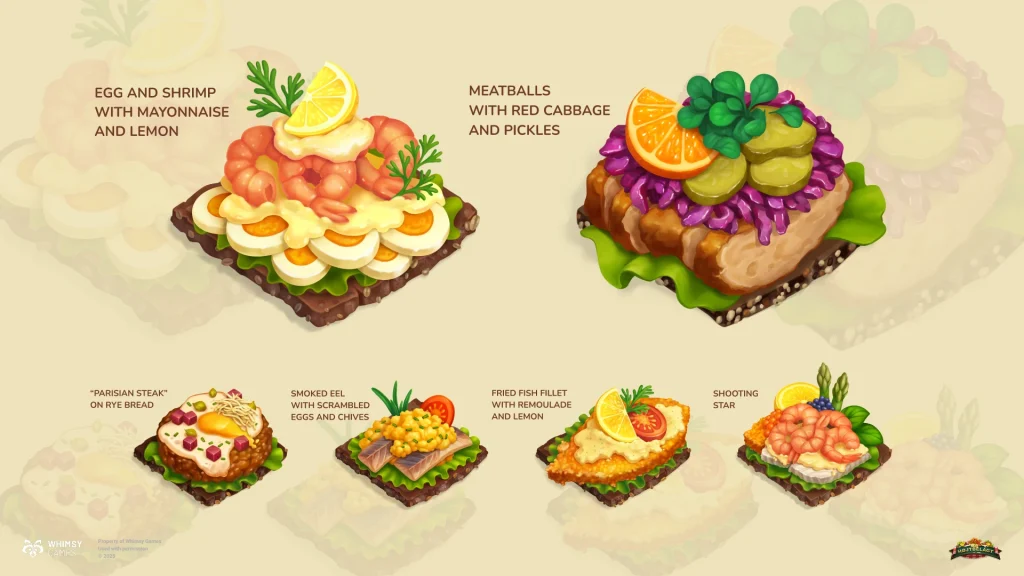
The art package included custom 2D illustrations, animated reveal sequences for the lottery mechanic, and a UI designed to communicate clearly with players who might be new to digital lottery formats. Deliverables were produced for both desktop and mobile, with a consistent visual style across all touchpoints.
Cat Slots and Royal Slots
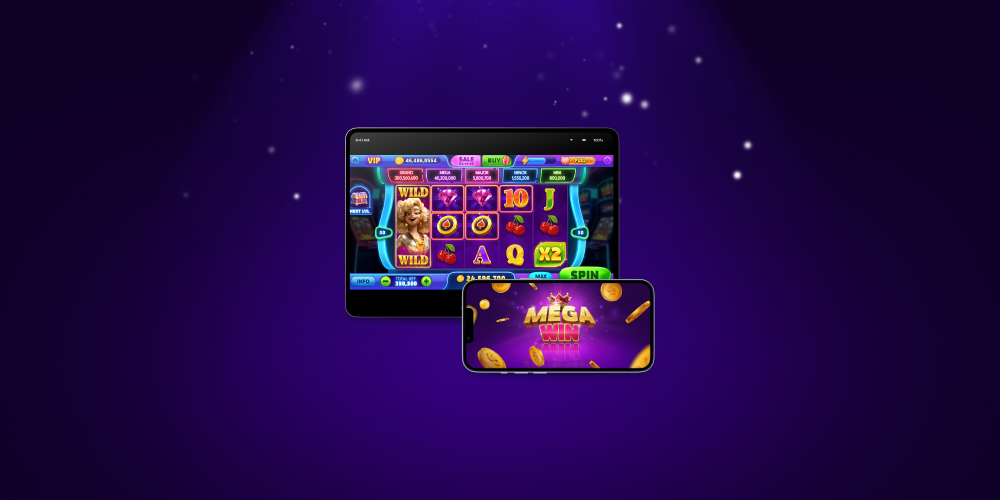
The Cat Slots and Royal Slots projects showcase the studio’s 2D illustration and animation capabilities for social casino formats. Both titles prioritise vibrant, high-saturation colour palettes and expressive character animation, reflecting the visual conventions of the social casino audience.
These projects are particularly relevant for operators evaluating art outsourcing for social or sweepstakes casino products, where visual appeal drives install rates and the art must compete with mobile gaming broadly, not just other slots.
The full Whimsy Games portfolio covers 2D, 3D, UX/UI, animation, and slot-specific art across more than 100 game development and art production projects.
Freelancer vs. Art Studio vs. Full-Cycle Studio: Which Model Fits Your Project?
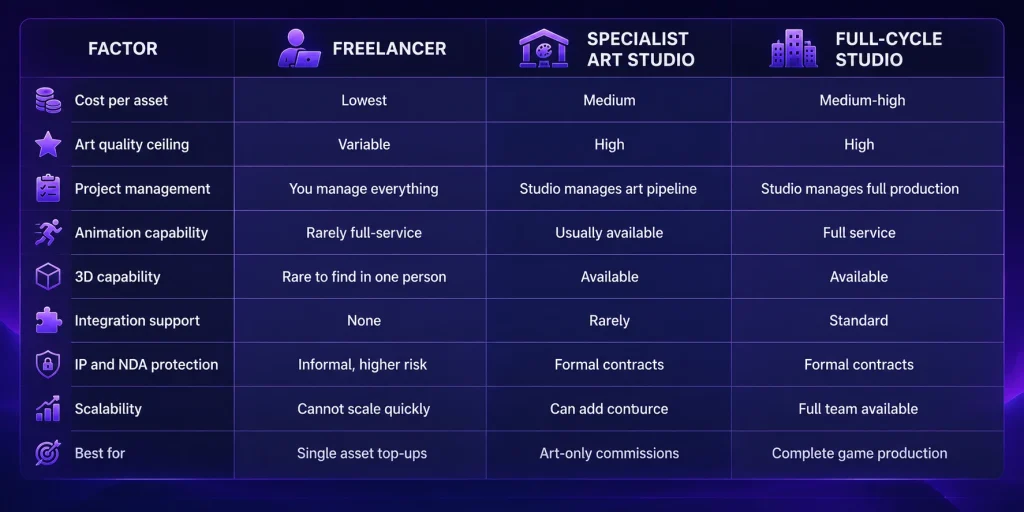
Operators evaluating game art outsourcing services typically have three engagement models to choose from. Each has a legitimate use case. The wrong choice for your project type will cost you time, money, or both.
When a Freelancer Makes Sense
Freelancers are a good fit for small, clearly defined, low-risk tasks: a single promotional banner, a set of UI icons for an existing game, or a concept sketch for internal discussion. The cost is lower, and you can often get fast turnaround.
The risk grows as the scope grows. A single freelance illustrator rarely has the capacity and specific iGaming experience to produce a complete, consistently styled animated symbol set. When operators piece together a full art package from multiple freelancers, they often end up with visual inconsistency that is time-consuming and expensive to fix.
When a Specialist Art Studio Makes Sense
A specialist art studio (one that handles art production but not game development) is ideal when you have an internal dev team that will handle integration, and you want a reliable, managed art pipeline without paying for development services.
The main limitation is the handoff. Art delivered without deep development context—without understanding the game engine, reel configuration, or animation state machine—often needs extra work during integration. This hidden cost is something operators frequently underestimate when choosing an art-only supplier.
When a Full-Cycle Studio Makes Sense
A full-cycle studio that delivers both art and development is usually the most efficient model for iGaming projects. Art is produced with the integration requirements in mind, animation states are built to match the game logic, and the delivery manifest is structured for the development team’s real workflow.
In practical terms, art created by a team that also builds the game is typically integration-ready on the first delivery. This avoids the rework cycles that can add 2–4 weeks to projects where art and development are handled by separate vendors.
Whimsy Games operates as a full-cycle iGaming studio, which means art production, slot game development, and QA are handled by a single team. Operators can commission art only, development only, or the full package, with the same team available across all three engagements.

The Benefits of Outsourcing Slot Game Art (Summary)
Regardless of which model you choose, outsourcing art production delivers measurable advantages over building an in-house team:
- Cost efficiency: Outsourcing reduces art production costs by up to 40% compared to equivalent in-house staffing, according to Business Research Insights, primarily by eliminating recruitment, benefits, equipment, and idle-time costs.
- Speed to market: Asset production cycles are 35% shorter on average through outsourcing, because specialist studios run parallel pipelines that in-house teams cannot replicate.
- Access to specialisation: iGaming art requires a specific combination of skills (Spine animation, slot symbol conventions, mobile-optimised asset delivery) that is difficult to hire for permanently in most markets.
- Scalability: An outsourcing partner can scale resource up or down per project without the hiring and redundancy costs of permanent headcount.
- Risk reduction: Professional studios carry IP protection clauses, NDA frameworks, and version-controlled asset management as standard. Freelancer arrangements rarely offer equivalent protection.
How to Brief a Game Art Outsourcing Partner Effectively
The single biggest factor in the success of a game art outsourcing project is not the studio’s talent. It’s the quality of your brief. Studios can only work with the information you give them. An incomplete brief leads to incomplete or misaligned art.
A brief that sets the project up for success usually covers:
What to Include in Your Art Brief
Project fundamentals:
- Game type (slot, crash, scratch card, lottery)
- Reel or grid configuration (e.g. 5×3 reels, 243 ways)
- Number of symbols required, including wild, scatter, and bonus symbols
- Platform targets and minimum supported resolution
Visual direction:
- Theme and narrative (e.g. “ancient Egypt, mystical rather than cartoonish, targeting 25-45 demographic”)
- Visual references (3-5 existing titles or art styles that approximate the desired output)
- Styles to avoid (equally important)
- Colour palette preferences or restrictions
Technical requirements:
- Game engine (Unity, Unreal, proprietary)
- Animation format preferences (Spine, sprite sheet, or both)
- File format and resolution specifications
- Any regulatory restrictions on imagery (jurisdiction-specific)
Commercial context:
- Target launch date
- Budget range (helps the studio recommend the appropriate scope)
- Whether this is a standalone title or part of a series requiring visual consistency
Operators who provide this information upfront receive more accurate proposals, faster turnaround on concept approval, and fewer revision cycles. Those who brief with “Egyptian theme, make it look premium” will spend the first two weeks of the project iterating on style direction that should have been resolved before production began.
For operators who are unsure how to structure a brief, Whimsy Games provides a briefing template as part of the initial consultation. The contact page is the starting point for any new art commission enquiry.
Getting Started with Game Art Outsourcing
Game art outsourcing for iGaming is now a mature, well-structured service. Experienced studios have refined workflows, clear deliverable standards, and iGaming-specific expertise (reel formats, animation state conventions, regulatory imagery constraints) that generalist art studios may lack.
For most operators and publishers without a permanent in-house art team, the real decision is no longer whether to outsource. It’s which type of partner to choose and how to brief them effectively.
The short version:
- For a single-asset task, a freelancer can work. For anything requiring visual consistency across a full title, use a studio.
- For art-only commissions where you have internal development, a specialist art studio is appropriate.
- For complete title production, a full-cycle studio eliminates the integration handoff problem and typically delivers faster.
Whimsy Games has delivered game art services across more than 100 iGaming projects, from single symbol set commissions through to complete slot titles with 3D characters, cinematic intros, and full animation packages. The team works in Unity and Unreal and delivers to the technical specifications of any major integration target.
To discuss your project requirements, review the full portfolio or get in touch directly to request a scoping call and indicative timeline.